5 Warning Signs Your Chicago Furnace Is About to Fail (And What to Do Right Now)
When temperatures plummet below zero in Chicago, your heating system becomes critical for your home’s safety. Fortunately, most furnaces give clear warnings that something is wrong. Recognizing signs your furnace is failing gives you time to address problems before they escalate into an emergency.
Once you’re aware of these signals, you’ll know what to do when your furnace stops working and exactly when to call for 24/7 emergency furnace repair services.
Why Catching Furnace Failure Signs Early Matters in Chicago
Chicago’s sub-zero temperatures transform a “no heat” situation into an emergency within hours. Frozen pipes can burst and cause significant damage. Lack of heating can also cause ice dams to form, which force water under shingles, creating roof leaks. Health risks increase for elderly family members and young children in the cold, so it’s vital to get the heat up and running quickly.
If you can catch problems before your furnace completely breaks down, you’ll preserve your comfort and stay ready for Chicago’s coldest days.
5 Signs Your Furnace Is Failing
Catching furnace problems early can save you thousands in repairs and prevent hazardous situations. Here are the five most common warning signs Chicago homeowners need to know about:
1. No Heat or Uneven Heat
You might notice that rooms never reach the set temperature, the furnace turns on briefly, then shuts off, or you get lukewarm air instead of hot. If you’re wondering why your furnace is blowing cold air, heating unevenly, or turning on and off, it could be due to an issue with the heating cycle, thermostat, or ignition system.
See the following list to help you identify and deal with these concerns:
- Check your thermostat and confirm it’s set to “Heat” mode and at least five degrees above room temperature. Replace the batteries if the display looks dim.
- Check your circuit breaker for a tripped breaker and verify that the furnace power switch is set to “On.”
- Replace your air filter if it’s dirty or hasn’t been changed for a while. Also, ensure furniture isn’t blocking vents.
If the unit continues to shut off after these checks, call a professional repair service.
2. Unusual Noises
If you notice loud banging noises coming from your furnace, you’re likely experiencing delayed ignition. This occurs when gas builds up in the combustion chamber and ignites all at once, producing a loud, banging sound. If you hear a high screeching sound, this indicates worn blower motor bearings or belts. Rattling suggests loose panels or damaged components.
Complete these steps to prevent further damage:
- Turn your system off immediately if the noise is sudden and loud or accompanied by a burning smell or smoke.
- Record a short video of the sound to help technicians diagnose quickly.
- Don’t attempt repairs yourself.
- Schedule an inspection with a qualified technician before the problem worsens.
3. Strange Odors
Any unusual smell coming from your furnace or vents signals a problem. Causes include worn parts, overheating components, faulty wiring, or even a gas leak. It’s crucial to take any change in air quality or smell seriously and address it as quickly as possible.
Here’s what to do if you notice any odors or air quality changes:
- Gas smell: An odor of rotten eggs or sulfur can signal a potential gas leak. If you notice this, don’t touch the light switches and leave your home immediately. Call your gas company or 911 from outside, then contact the HVAC repair service.
- Burning/electrical smells: If your furnace smells like burning plastic or rubber, it indicates overheated parts or wiring malfunctions. Metallic odors can signal heat exchanger cracks, which pose a serious risk of carbon monoxide exposure.
- Musty smells: Musty odors indicate moisture or mold problems. Schedule diagnostics to inspect ductwork for signs of water damage or intrusion.
4. Short Cycling, Frequent Resets, or Shutting Off
Overheating from restricted airflow, which can result from dirty filters or blocked vents, tops the list. A malfunctioning flame sensor, pressure switch issues, or thermostat malfunctions also cause erratic cycling. Do the following to help your furnace function properly:
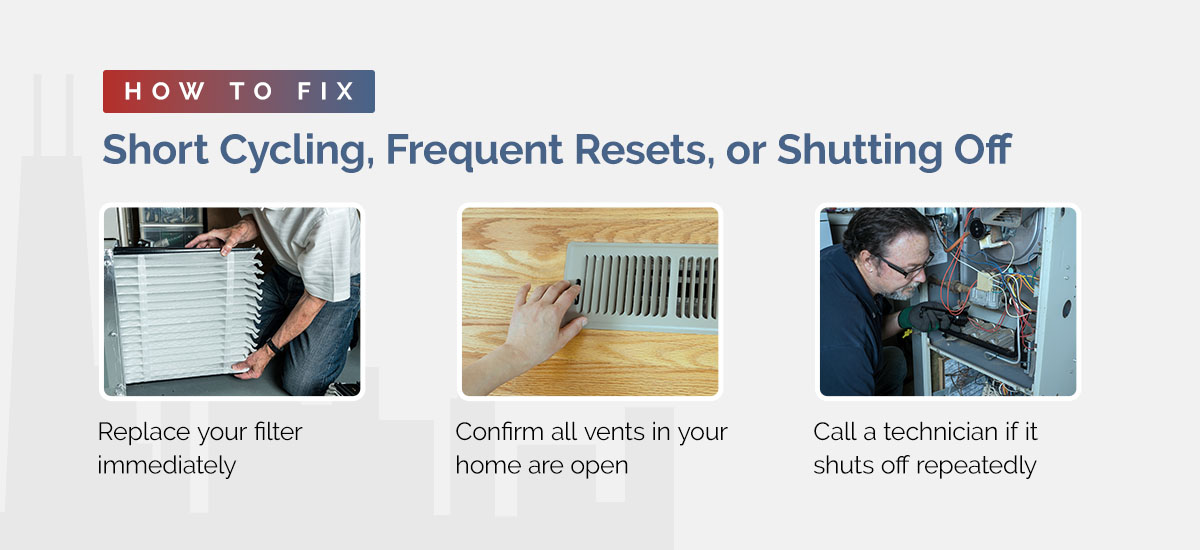
- Replace your filter immediately, as this can be a quick fix for short cycling
- Confirm all vents are open throughout your home
- If the system shuts off two or three times, stop and call an expert for furnace repair service
5. Higher Bills and Weak Airflow
Sudden spikes in utility bills, longer run times, weak airflow from vents, and excessive dust accumulation all signal declining efficiency. Dry indoor air, which can cause static and respiratory irritation, also points to potential problems.
To deal with these malfunctions, do the following:
- Inspect vents and registers for blockages
- Check and replace your filter
- Monitor your furnace’s run cycles to inform your technician
Proactive service costs significantly less than repairs and can extend your heating unit’s lifespan. A replacement for an older furnace will also save costs due to increased efficiency.
When to Get Emergency Furnace Repair in Chicago
Knowing when to call a professional HVAC technician and identifying whether the issue is an emergency or not will put you in the best position to preserve your heating system.
If you notice these signs, shut off the system and request a furnace repair service:
- No heat when temperatures are below freezing
- Gas smell
- Carbon monoxide alarm sounding
- Burning odor, smoke, or smell that doesn’t dissipate
- Visible sparks or flames
- Water leaking onto electrical components
- Extreme overheating
- Repeated automatic shutdowns or safety lockouts
If it isn’t a gas leak or carbon monoxide issue that requires you to leave your home immediately, be sure to follow these interim measures while you wait for repairs:
- Protect pipes: Open cabinet doors under sinks, let faucets drip slowly.
- Use space heaters safely: Keep at least three feet away from flammable materials, never leave them unattended, and plug them directly into wall outlets.
- Conserve heat: Close off unused rooms and use towels to block drafts under doors.
- Monitor temperatures: Try to keep your home above 55° F to prevent pipes from freezing.
Get Fast Help from Chicago HVAC Repair Doctor
When your furnace shows warning signs or breaks down, you need a team you can trust. Chicago HVAC Repair Doctor offers reliable and honest service. We provide 24/7 emergency furnace repair service and licensed technicians who treat your home like their own. For nonemergency needs, we offer repair services during business hours, Monday through Friday, 8:00 a.m. to 5:00 p.m., and Saturday, 8:00 a.m. to 12:00 p.m.
When you contact us for repairs in one of our service areas, having this information ready will help us identify and fix the issue:
- Furnace make and model
- Current thermostat setting
- Error codes or flashing lights
- Warning signs you are experiencing
- When the problem started

Book a Diagnostic or Request Emergency Service
While furnace diagnostic service costs vary, catching problems early costs far less than emergency repairs. Our maintenance plan offers priority service, extended hours, and discounts, giving you excellent peace of mind.
If you’re a Chicagoland homeowner experiencing any unusual issues with your heating system, call us at